Attachment Styles Explained: Secure, Anxious, Avoidant and Fearful-Avoidant
What attachment styles are, how they show up in adult relationships, what the research really says, and why your style isn’t fixed.
The way we learned to stay close (or stay safe) as kids often shows up in adult love. Attachment ideas give you language for patterns you may have felt for years, and a path toward steadier connection.

What a trauma bond is, why intermittent kindness creates powerful attachment, warning signs, and where to get help safely.
Read it
What attachment styles are, how they show up in adult relationships, what the research really says, and why your style isn’t fixed.

What anxious attachment looks like in adult relationships, why it develops, and practical ways to calm the alarm without losing yourself.

Signs of avoidant attachment, why self-reliance became the safest strategy, and how to let people closer without feeling trapped.

Attachment patterns can change. What “earned security” means and the daily practices that help anxious and avoidant people feel steadier in relationships.

How fear of abandonment shows up in relationships, how it differs from love, and practical ways to calm it.

Signs of hyper-independence, the hidden fears it can protect, and how to slowly let others help without feeling unsafe.
Love allows honesty, individuality, boundaries and mutual choice. Fear of abandonment can create urgency, over-functioning, self-silencing and constant monitoring.
See all 8 differencesNeeding space is healthy. Withdrawing without explanation leaves the other person alone with their fear. The difference is communication.
See all 8 differencesCaretaking means managing someone else’s life and feelings, often at your own expense. Mutual support flows both ways.
See all 8 differencesAnxious attachment stays on alert for distance. Secure attachment trusts connection enough to relax into it.
See all 8 differencesHot-and-cold attention can feel thrilling and addictive. Consistent care can feel boring at first, but it’s what lets a nervous system rest.
See all 8 differencesFamiliar doesn’t always mean safe. We’re often drawn to what feels like home, even when home wasn’t safe.
See all 8 differencesChemistry is the spark. Compatibility is whether two lives can actually fit together over time.
See all 8 differencesBeing emotionally available means being present and open. Emotional dependence means needing someone else to regulate your feelings for you.
See all 8 differencesReassurance soothes for a moment. Emotional security is the inner steadiness that makes constant reassurance unnecessary.
See all 8 differencesHealthy independence is a strength you can set down. Hyper-independence is a rule you can’t break: never need anyone.
See all 8 differences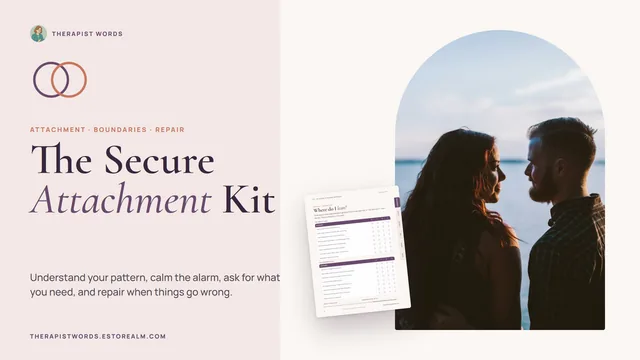 Relationships bundle
Understand your attachment pattern, calm the alarm, ask for what you need, and repair when things go wrong.

A short, warm email every week: a word therapists use, what it means for your life, and something gentle to try. No spam, no pressure.
We use analytics cookies to understand how visitors use our site. Functional cookies (session and page variant) are always set. See our Privacy Policy.